Review Management for Auto Repair Shops: Drive More Customers with Reviews
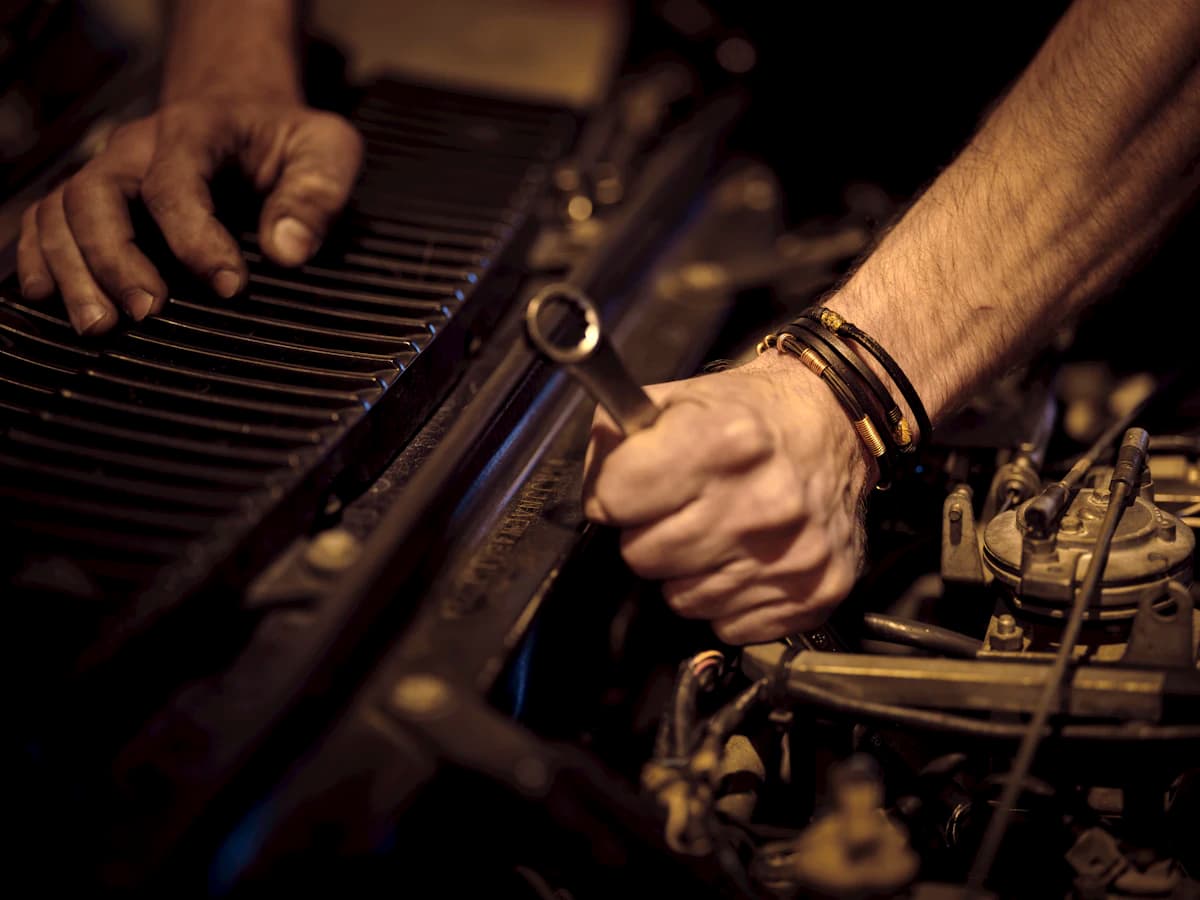
For independent auto repair shops, reviews are the difference between a thriving business and one losing customers to dealerships. 84% of people research mechanic reviews before choosing where to take their car, and reviews directly impact customer lifetime value. Yet most independent shops don't actively collect them, leaving customers as one-time transactions instead of loyal repeat clients.
Why Do Reviews Matter for Auto Repair Shops?
Car owners are nervous about mechanic shops. They worry about overcharging, unnecessary repairs, and quality of work. When someone searches "trusted mechanic near me" or "honest auto repair [city]," they're looking for reviews to build confidence. A shop with 70 five-star reviews saying "fair pricing," "honest work," and "fixed my issue right" will attract customers faster than a shop with 5 reviews, even if both are equally good.
Reviews are also your competitive advantage against dealerships. Dealerships have brand recognition and marketing budgets, but independent shops have something they don't: authentic customer relationships. A customer who had a great experience at your shop should become a loyal repeat customer for maintenance, repairs, and referrals. Reviews turn that goodwill into marketing and customer loyalty.
How Do You Compete with Dealerships and Build Trust?
Independent shops face a trust problem that dealerships don't. Dealerships have brand and warranty backing. Independent shops need to prove they're trustworthy through reviews and customer relationships. This means your review strategy has a specific goal: turn every good customer interaction into a testimonial that builds your reputation for honesty and quality.
The advantage you have is personalization. Dealerships are impersonal and expensive. You can offer better customer service, fair pricing, and direct relationships. When a customer notices this, they should review you. Make the review request easy, specific, and timed right so grateful customers actually follow through.
When and How Should You Ask for Reviews?
The best moment to ask for a review is when the customer is picking up their repaired vehicle. They just saved money by choosing you over the dealership, they're happy their car is fixed, and they're grateful. This is the moment to ask.
Send an SMS or email within 1 hour of pickup with a direct link to your Google review form. Keep it brief:
Routine Maintenance Template:
"Thanks for trusting us with your [vehicle]. Your oil change is done and everything looks great. If we did good work, we'd really appreciate a Google review. [Google Review Link]"
Major Repair Template:
"Great news — your [repair type] is finished and ready to go. Thanks for choosing us over the dealership. If we saved you money and did great work, please leave us a Google review. [Google Review Link]"
Warranty/Confidence-Building Template:
"Your [repair] is done and backed by our warranty. We stand behind our work. If we exceeded your expectations, we'd love a Google review. [Google Review Link]"
Notice the emphasis on fair pricing and quality — this is what differentiates you from dealerships. Customers who appreciate those values will review you if you ask.
How Do You Build Trust Through Transparency in Reviews?
The core advantage of independent shops over dealerships is transparency. You can be honest about pricing, explain repairs in plain language, and build trust through openness. Yet many shops don't leverage this in their reviews.
In your review request and follow-up messages, emphasize transparency: "If we explained your repair clearly and gave you fair pricing, we'd appreciate a review mentioning it." Invite customers to comment on your honest assessment of their vehicle's condition: "We found [X issues], fixed what was critical, and recommended future maintenance. If you appreciated our honesty, please mention it in your review."
This strategy builds reviews that specifically address customer concerns about dealership overcharging and unnecessary repairs. A review saying "They diagnosed my car honestly and only fixed what was necessary" is gold for attracting customers tired of dealership markups. Feature these transparent-focused reviews on your website prominently. They're your competitive advantage.
How Do You Handle Pricing Concerns Strategically?
Pricing complaints are the most common negative reviews for auto repair shops. A customer expecting $300 for a repair who gets charged $500 will review negatively. Yet these situations often contain misunderstandings about labor costs, parts pricing, or diagnosis fees.
When you receive a pricing complaint review, respond with education and grace: "We appreciate your feedback. The charge reflects [labor hours + parts + diagnostic]. Automotive repairs often cost more than customers expect. We'd welcome a discussion about our pricing and explain how we arrive at estimates. Please call us directly." This doesn't excuse high pricing, but it creates an opportunity to explain and potentially win the customer back.
More importantly, prevent pricing complaints by being transparent upfront. Train your service advisors to provide detailed estimates and explain what's included. Consider sending photo estimates to customers before work — show them the damaged component and explain labor time. When customers understand why something costs what it does, they're less likely to be shocked and leave negative reviews.
What Is the Service Advisor's Role in Review Generation?
Your service advisors are critical to review generation. They interact with customers twice — when the car arrives and when it's picked up. They have two prime moments to ask for reviews, yet many shops don't empower advisors to make these requests.
Train service advisors on how and when to ask: "If your repair went smoothly and we treated you well, we'd really appreciate a Google review. It takes 30 seconds and helps us a lot." Provide them with a leave-behind card with a QR code link to your Google review form. Make it easy for advisors to ask and for customers to comply.
Consider tying advisor performance to reviews. Track which advisors generate the most positive reviews and recognize them. This creates healthy competition and incentivizes advisors to provide great service (which they're doing anyway) while also asking for feedback. An advisor who delivers great service but never asks for reviews generates fewer review opportunities than an advisor who delivers good service and actively requests reviews.
What Are Warranty Work and Review Opportunities?
When you warranty work and a customer returns with a problem, this is a critical moment. If you fix the issue with no charge and apologize, you can turn a potential negative into a positive. The customer feels valued and protected. This is a high-likelihood moment for a positive review.
When addressing warranty work, be proactive: "We stand behind our work. We'll fix this at no charge. If we make this right, we'd really appreciate a review mentioning our warranty guarantee." This frames the warranty as a value proposition, not a problem. A review saying "They fixed my repair free under warranty — they stand behind their work" is incredibly persuasive for customers worried about repair quality.
Track warranty work carefully and make sure each one includes a review request. Warranty fixes are proof that you care about quality, and customers who experience this should review. It's your best testimonial material.
How Do Specialty Service Reviews (EVs, Diagnostics) Work?
If your shop specializes in electric vehicle (EV) maintenance, advanced diagnostics, or other specialty services, these deserve specific review attention. Customers who trust you with complex work are often early adopters or tech-savvy individuals. They're more likely to leave detailed reviews about your expertise.
In your review request for specialty work, emphasize the expertise: "If we impressed you with our EV knowledge and service, we'd love a review mentioning it. EV expertise is rare in the market, and your feedback helps other EV owners find us." This generates reviews that specifically attract other EV owners looking for trusted specialists.
Create a dedicated section on your website for specialty service reviews. Feature testimonials about EV servicing, diagnostic expertise, or rare problem-solving. Customers searching for specialty services will find these reviews and choose you over generalist shops.
How Does Photo Documentation Build Trust?
Photos of repairs are incredibly persuasive. A customer who sees a photo of their old, worn brake pads next to new ones, or a corroded battery that was replaced, understands the value delivered. This concrete visual proof builds trust and increases review likelihood.
Train your technicians to take before-and-after photos for all repairs and send them to customers with the invoice. Include a note: "Here's what we fixed on your vehicle. If you're satisfied with the quality and transparency, please leave us a Google review." These photos give customers something to reference in their review and something to show friends and family, extending your reputation through secondary recommendations.
Use customer photos as marketing content. Ask permission to feature their before-and-after photos on your website and social media. Real customer photos are far more persuasive than stock images. A potential customer sees your real work on real vehicles and feels more confident in your ability.
How Do You Turn Service Quality Into More Reviews?
Not every repair results in a perfectly happy customer. Some jobs involve warranty issues, dissatisfaction, or complications that require follow-up. The shops that build a strong reputation make it easy for happy customers to leave a review and resolve concerns directly and quickly.
After a repair, send a quick follow-up by SMS or email inviting the customer to share their experience on Google. If a customer raises a concern, have the shop manager reach out personally — catching problems early and resolving them turns frustrated customers into loyal ones.
For shops with warranty issues or repairs that need follow-up, proactive communication is invaluable — you catch problems early, resolve them directly, and earn genuine reviews from satisfied customers.
How Do You Build Loyalty with Maintenance Reminders?
The goal isn't just to get reviews — it's to build recurring customers. An oil change customer should become a maintenance customer. A tire rotation customer should return for brakes. Use reviews as part of a larger customer loyalty strategy.
After positive reviews, send customers maintenance reminders: "Your oil change was [X months ago]. Time for the next one?" or "Your tires rotated [X miles ago]. Let's get them checked." Customers who feel valued and trusted (through positive review exchanges) are more likely to return. Reviews build the emotional foundation for customer loyalty, and maintenance reminders keep them coming back.
This is how you compete with dealerships: dealerships get one transaction. You build relationships. Every positive customer interaction should trigger both a review request and a loyalty reminder.
How Do You Handle Comeback Repairs Without Killing Your Rating?
Every shop deals with comebacks. A part fails sooner than expected. A noise comes back after a week. The check engine light pops on again. It happens, and how you handle it determines whether that customer becomes your biggest fan or your worst review.
I've seen shops lose their 5-star rating over a single comeback they handled poorly. The customer brought the car back, the service advisor got defensive, and the whole thing turned into a shouting match in the lobby. That customer went home and wrote a 1-star review that mentioned every detail. It sat at the top of the shop's Google profile for months.
The fix is simple but it requires swallowing your pride: take the car back immediately, don't charge for the re-diagnosis, and fix it with a smile. Even if you think the customer caused the problem. Even if the part was defective and it's not your fault. The cost of one free repair is nothing compared to the cost of a bad review that scares away 20 potential customers.
After you make it right, that's actually the perfect time to ask for a review. "We know the first repair didn't stick, and we're sorry about that. We hope the way we handled it shows that we stand behind our work. If you're willing, a Google review about your experience would mean a lot — the good and the bad." Customers who see a shop own its mistakes and fix them? They leave some of the most powerful reviews you'll ever get. "They fixed it wrong the first time BUT they made it right immediately and didn't charge me" is more convincing than 10 generic 5-star reviews.
What's the Untapped Market for Women's Experiences at Your Shop?
Let me be blunt about something the auto repair industry doesn't talk about enough: women make up roughly half of car owners, and many of them have had terrible experiences at mechanic shops. They've been talked down to, overcharged, or made to feel like they don't belong. If your shop treats women with the same respect and transparency you give every customer, you have a massive competitive advantage — and reviews are how you prove it.
When a woman leaves your shop and feels like she was treated fairly, explained to clearly, and charged honestly, that's a review waiting to happen. And those reviews carry outsized weight because other women searching for a mechanic specifically look for them. A review saying "As a woman, I finally found a shop where I don't feel like I'm being taken advantage of" will attract more new customers than almost any other type of review you can get.
Train your team on this. No condescension. No "let me explain this in simple terms." Just the same straightforward, honest communication you'd give anyone. When your shop earns a reputation for treating everyone with respect — and the reviews prove it — you'll pull customers from every dealership and competitor in your area who hasn't figured this out yet.
How Does the "Second Opinion" Strategy Build Trust Fast?
Here's a trick that works incredibly well for independent shops: offer free second opinions on dealership repair quotes. A customer comes in with a $2,400 quote from the dealer. You inspect the car, confirm what actually needs to be done, and give them an honest estimate — maybe $900 for what's urgent and $600 for what can wait. You just saved them $900 and earned their trust in 15 minutes.
These customers are the easiest review converts you'll ever find. They came to you skeptical and left feeling protected. Your review request practically writes itself: "Glad we could give you a second opinion and help you prioritize the repairs that matter. If we saved you money and earned your trust, we'd love a Google review." The resulting review will mention the dealership price comparison, which is exactly what other price-conscious car owners search for.
Some shops I know have built their entire marketing around this. They run Google Ads targeting "dealership repair too expensive" and "second opinion on car repair." The customers who come in through those ads leave reviews that attract more customers with the same concern. It becomes a self-reinforcing cycle, and it starts with being honest about what actually needs to be fixed.
How Important Are Fleet and Commercial Vehicle Reviews?
If you service fleet vehicles — delivery vans, work trucks, company cars — don't ignore these customers in your review strategy. Fleet managers control 5, 10, sometimes 50+ vehicles. One good review from a fleet manager carries more business weight than a dozen individual reviews because it signals you can handle volume and commercial-grade work.
After completing fleet service, ask the fleet manager specifically: "If our turnaround time and pricing work for your fleet, a Google review mentioning your fleet experience would help us attract other commercial customers." Fleet managers are business people — they understand the value of a good review and they'll often write one if asked directly.
Feature fleet reviews in a separate section of your website. A landscaping company that reviews you for maintaining their 8 trucks is powerful social proof for other small businesses with vehicle fleets. These B2B reviews open a revenue stream that most independent shops don't even think about competing for.
Responding to Reviews Quickly
Active review management signals that you care about customer feedback. Respond to all reviews within 24 hours. For positive reviews mentioning fair pricing: "Thanks for the kind words! We're proud to offer honest service at fair prices. We'd love to see you for your next maintenance."
For reviews mentioning specific repairs: "Glad we could get your [repair] fixed quickly and correctly. Feel free to reach out anytime you need service."
For negative reviews: "We're sorry to hear about your experience. We'd like to make it right. Please reach out directly so we can discuss and address your concerns."
The free AI Review Response Generator can draft these suggestions instantly, which you review and personalize before posting. This keeps your reviews actively managed and your business responsive, building trust with every interaction.
Looking for auto repair-specific review solutions?
Check out our dedicated BlooTrue for Auto Repair page for widget ideas, pricing, and tips designed specifically for auto repair shops.
Build Trust and Drive Recurring Customers
BlooTrue shows your Google, Yelp and Facebook reviews on your shop website with one line of code — 100+ widget styles, unlimited views, free to start.
Start Free for Auto Repair ShopsTry Our Free Tools
Review QR Code Generator — Turn your Google review page into a scannable code and shareable link for easy sharing. No signup required.
Review Request Template Generator — Generate SMS and email templates tailored to auto repair shops. No signup required.
Review QR Code Generator — Create QR codes for waiting areas and receipts. No signup required.